Meet 2011 TR35 Winner Jesse Robbins
MIT Technology Review by MIT Technology Review · · Video · 04:16
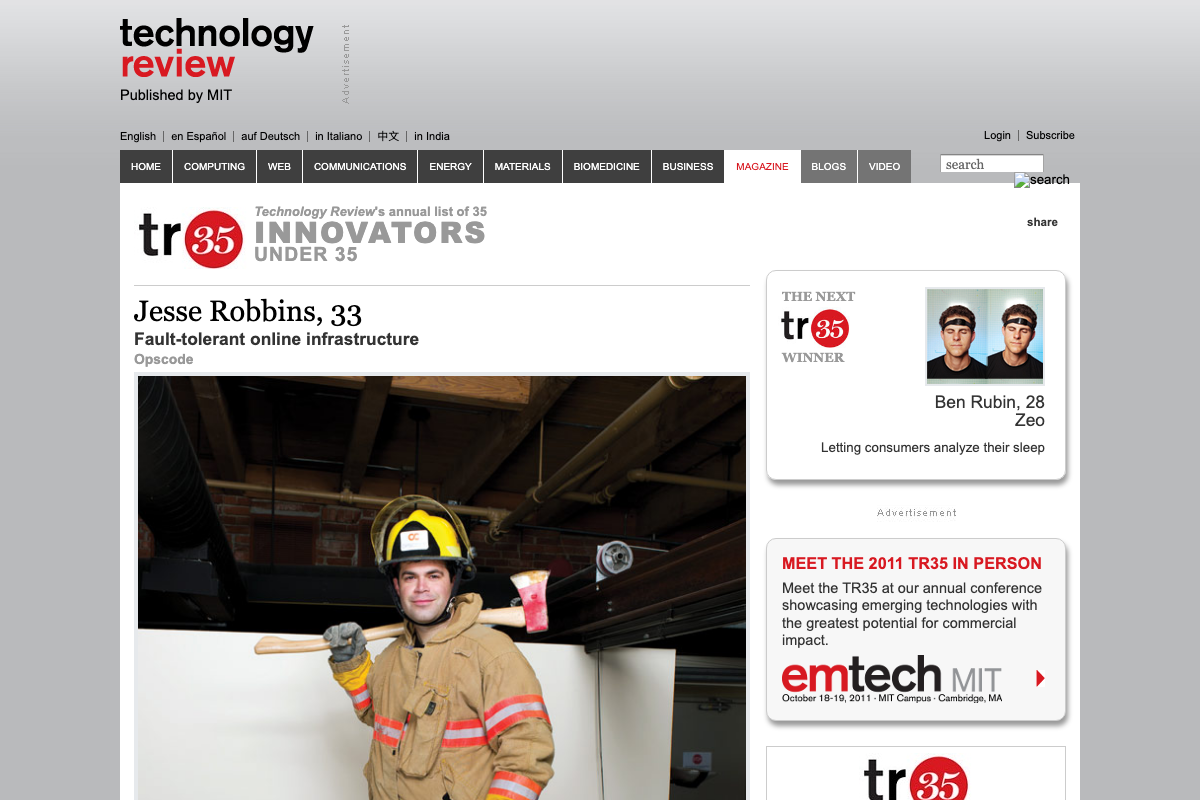
MIT Technology Review’s 2011 TR35 recognition highlighted Jesse Robbins as an innovator under 35 for his work on DevOps culture and infrastructure automation at Opscode, marking the shift from operations as manual toil to infrastructure as code.
Jesse Robbins, 2011 TR35 Winner
Category: Internet & web Year Honored: 2011 Organization: Opscode Region: Global Focus: Fault-tolerant online infrastructure
Biography
Jesse Robbins initially pursued two career paths in 2001: a Seattle bus driver position and a backup systems engineer role at Amazon.com. Amazon’s offer came first, launching a decade-long career that revolutionized how web companies handle complex server and software networks.
Drawing from his background as a volunteer firefighter, Robbins brought crisis management principles to infrastructure design. He recognized that massive global operations inevitably experience failures and built systems to withstand them safely. Rather than preventing failures, he made Amazon resilient to them through architectural fault tolerance and live operational drills that tested teams by temporarily taking entire data centers offline, without affecting customer experience.
After departing Amazon in 2006, Robbins shared his methodologies through blogging. In 2007, he established Velocity, now an annual conference where major competitors openly discuss infrastructure management solutions.
Robbins cofounded Opscode in 2008. The company’s flagship product, Chef, is an open-source programming language automating cloud-based infrastructure management. One notable application involved scientists using Chef to deploy a 10,000-processor supercomputing cluster in 45 minutes on Amazon’s cloud, completing complex protein-binding research in eight hours, then shutting down operations, all at a fraction of traditional supercomputing costs.